
Mythic Survivors
Pixery Bilgi TeknolojileriAction
4.754.00 Reviews
- Version
- 1.0.14
- Installs
- 100.00K
- Age Rating
- Everyone 10+
Screenshots

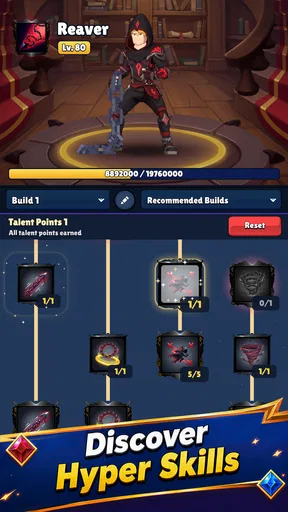
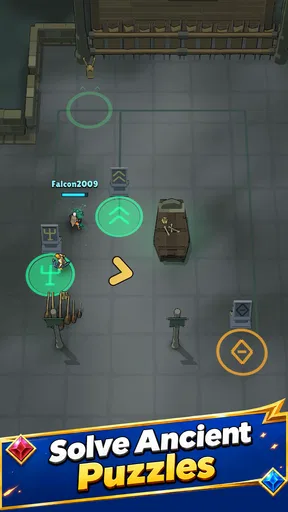
Our Review of Mythic Survivors
 Analysis by Appyee
When I first picked up Mythic Survivors, I approached it as the kind of action game that works well in short bursts: choose a character style, improve abilities, and see how far I could push a run before the screen became too dangerous. That impression held up, but the game is more interesting when treated as a shared-device experience rather than something everyone in a household casually jumps into without a plan. Its simple entry point makes it easy to hand over to another player, while the build decisions become personal very quickly.
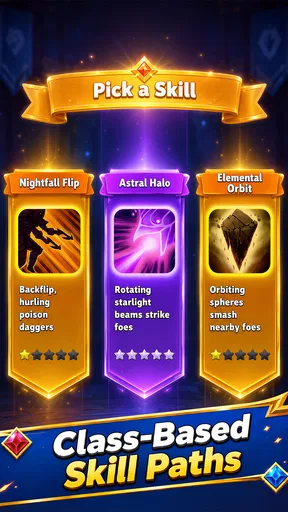
Developed by Pixery Bilgi Teknolojileri, this free action game focuses on selecting a class, shaping a powerful skill setup, and moving through chapters and rifts. I found the basic loop easy to understand, yet it still gives me enough decisions to make each session feel purposeful. It is not the sort of game I would choose for a long story campaign or a competitive match with friends. I would choose it when I want focused combat, quick experimentation, and a progression path that can be discussed with someone else using the same phone or tablet.
How Mythic Survivors Fits Into a Shared Household
I find Mythic Survivors easiest to share when the household agrees on a simple routine before passing the device around. A quick handoff at the end of a run keeps one person’s decisions from becoming another person’s surprise, and a shared purchase rule avoids confusion on a free-to-install game with optional items. That practical setup also makes it easier to decide whether everyone is comfortable using one progression path.
A practical game for passing around one device
The most natural household scenario is a shared Android device used at different times. One person can take a run, stop, and leave the device for somebody else, who may prefer a different class or a different way of building skills. That makes the game easy to introduce during a quiet evening, a commute, or a short break when a family member is already using the larger screen for something else.
What I like about this arrangement is that the game creates conversation without requiring everyone to play simultaneously. A younger player might ask which ability is worth choosing, while an experienced player may want to compare a safer build with a more aggressive one. The game’s appeal comes from those choices, not from pretending that a shared device automatically creates shared progress.
That distinction matters. I would not hand the device over in the middle of somebody’s run and assume the next player will understand what was happening. Action games punish interruptions, and a build that makes sense to one person may feel awkward to another. A simple household routine works better: finish a run, return to a stable menu or progression screen, and explain what has changed before the next person starts.
Why the short-session structure helps
Mythic Survivors suits players who want a game that can be opened with a clear objective. I can decide to test a class, work through a chapter, or explore a rift, rather than needing a large uninterrupted block of time before the game becomes enjoyable. This is especially useful on a device that is shared between schoolwork, entertainment, and practical tasks.
At the same time, I would not describe it as completely effortless. The moment-to-moment action may be approachable, but the consequences of choosing skills are more important once a run becomes demanding. A player who only wants to tap through without thinking may enjoy the opening, then lose interest when survival depends on making better choices. That is a fair trade-off for the people who enjoy refining a build, but it is worth knowing before installing it for a very young or impatient player.
Keeping different play styles separate
In a household, the best way to avoid friction is to agree on who is experimenting and who is trying to progress. If one person is testing unusual skill combinations while another is trying to move steadily through chapters, mixing those goals can create arguments about what counts as a successful session.
I found that the game works well as a “show me what you discovered” experience. One player can explain why a class felt comfortable, which skill choices caused trouble, or why a rift demanded a different approach. That kind of coordination is more useful than giving vague advice such as “choose the strongest option.” The value is in discussing how the choices behaved during actual play.
What to establish before the first session
Before letting several people use the same device, I would clarify whether everyone is comfortable sharing one progression path. The game is free to start, but it includes in-app purchases ranging from under a dollar to amounts approaching fifty dollars for an individual item. That makes a quick household conversation worthwhile, especially if the device is connected to a payment method.
I would also decide whether the game belongs to one main player or is being treated as a communal activity. Those are different arrangements. A main player may want to make every class and skill decision personally. A communal player may welcome suggestions and accept that another person will occasionally take a different route. Neither approach is wrong, but confusion is avoidable when the expectation is clear.
Account and progression boundaries
I would not assume that a shared device creates separate personal spaces. If several people want independent progress, they should first check how the installed version handles profiles, sign-in, or saved progress rather than treating the app as if it automatically separates players. I am deliberately cautious here because losing or mixing progress is much more frustrating than spending a minute agreeing on a routine.
For a household with one primary player, the safest practical habit is to let that person make the permanent decisions. Others can watch, recommend a class, or take turns only when everyone accepts that their choices may affect the same path. For independent players, separate devices or clearly separated access arrangements are preferable to relying on memory.
This is one of the less obvious trade-offs of a progression-focused action game. The easy controls make it tempting to pass the device around freely, but the meaningful build choices make careless sharing more costly. The game is friendly to shared use, yet it still benefits from boundaries.
Coordinating choices instead of taking over
When I give advice in this type of game, I try to ask what the player wants from the run before suggesting a skill. Someone who wants a forgiving session may value consistency, while someone testing a class may accept a fragile setup in exchange for learning. Telling a new player to copy the most aggressive choice can make the game feel unfair if that choice requires timing or awareness they have not developed.
A better household conversation is specific: “Do you want to survive longer, clear enemies faster, or see what this class can do?” That question turns the build system into a learning tool. It also prevents the experienced player from quietly turning somebody else’s session into their own.
I found that this approach helps with age differences. A child can make a choice and see its result, while an older sibling or parent can explain the trade-off without controlling every move. The game becomes more rewarding when the player understands why a run succeeded or failed.
Using chapters and rifts as shared goals
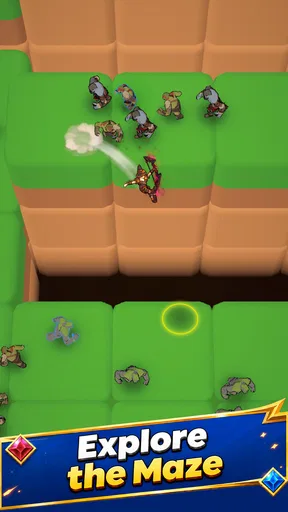
The chapter and rift structure gives a household two different ways to coordinate. Chapters provide a straightforward sense of moving forward, while rifts can serve as a place to test ideas or challenge a stronger player’s assumptions. I would use chapters when the group wants a clear shared target and rifts when the group wants to compare builds.
That distinction is useful in practice. If somebody is tired, pushing for progress may turn into frustration. A testing session in a rift can feel less like a failure because the purpose is experimentation. Conversely, if the household keeps testing without finishing anything, a chapter goal restores direction.
One concrete tip is to keep a short verbal record of discoveries: which class felt comfortable, which skill combination caused problems, and whether the player preferred a cautious or aggressive approach. There is no need for a complicated spreadsheet. A few notes in conversation can prevent repeated mistakes when the device is shared and several people remember the same run differently.
Age, trust, and the Everyone 10+ rating
Mythic Survivors carries an Everyone 10+ content rating, which places it in a reasonable range for older children and general family use, but I would still make the decision based on the individual child. A rating is a useful starting point, not a substitute for knowing how a child reacts to repeated combat, failure, and purchase prompts.
The action focus may be comfortable for one ten-year-old and too intense or frustrating for another. I would watch the first few sessions, not because the game needs constant supervision, but because the child’s reaction tells me more than the age label alone. If the player becomes upset after a failed run or starts asking for purchases without understanding them, I would pause and explain the household rules.
Trust also includes respecting another person’s progress. A child who is allowed to play on a parent’s device should know whether they may spend anything, change settings, or continue a run started by somebody else. Those expectations are especially important here because the game is free to install while still offering optional purchases. Free entry and unrestricted spending are not the same thing.
Handling purchases responsibly
The purchase range is broad enough that I would treat payment access as an adult responsibility. I would not rely on a child to recognize the difference between an in-game decision and a real charge. Before sharing the device, I would explain that selecting an item may have consequences outside the game and that permission is required.
This is not a criticism of the combat loop; it is a practical point about how free games fit into family devices. The game can be enjoyed without making spending the center of the experience, but a household should still establish a clear rule. If a player feels that progress depends on buying something, that is a good moment to step back and decide whether the game remains enjoyable for that person.
Where it stands beside familiar action alternatives
Compared with a traditional level-based action game, Mythic Survivors puts more weight on repeated runs, class selection, and skill decisions than on a long sequence of handcrafted story scenes. That makes it easier to discuss builds and share small discoveries, but less suitable for someone who wants a cinematic adventure with a fixed narrative destination.
Compared with a competitive multiplayer action title, it is a calmer household choice because the main conversation can happen before or after a run rather than through live teamwork and communication. I would recommend it over a competitive alternative for a shared device used by people with different schedules. On the other hand, players looking for direct competition, social matchmaking, or a strong team identity may find it too solitary.
Compared with very simple casual action games, it asks more from the player’s judgment. That extra layer is its strength when I want a reason to replay a session, but it is also the point where a casual player may decide that another game is a better fit. The right comparison is not “which game has more action?” but “does this player enjoy shaping a run as well as controlling it?”
Technical expectations and device fit
The current version is 1.0.14, and the game supports devices running Android 9 or later. That gives it a fairly broad place on modern Android hardware, though compatibility on paper does not guarantee that every older device will feel equally comfortable during busy action. I would install it on the device that will actually be used and judge responsiveness there rather than assuming a shared tablet and a budget phone will behave identically.
For household use, screen size can influence the experience. A larger display may make it easier for two people to watch a run and discuss choices, while a smaller phone is more convenient for private sessions. If the device is frequently passed between players, keeping it charged and avoiding interruptions is more important than chasing the biggest screen.
The game is free, which lowers the barrier to trying it with the family. Still, free installation should not be confused with a completely cost-free experience, given the available optional purchases. I would make the first session about learning the class and skill loop, not about deciding whether an item is worth buying.
Who will enjoy it most
I think the strongest audience is a player who likes action with a layer of planning. That person will enjoy trying a class, noticing how skills change a run, and using chapters or rifts as different kinds of goals. The game also suits households where one person enjoys explaining builds and another enjoys discovering them firsthand.
It is less convincing for someone who wants a relaxed game with no consequences attached to choices. It is also not my first recommendation for a player whose main reason for gaming is conversation with online teammates or direct competition. The game’s value is concentrated in its individual runs and the decisions surrounding them.
For a younger player, I would recommend it when an adult is comfortable with the action content and the household has clear purchase rules. For an older player sharing a device, I would recommend agreeing on progression boundaries first. Those small preparations make the game feel much more welcoming.
My household verdict
My overall impression is positive, with one important qualification: Mythic Survivors is easy to start but deserves more structure than its simple premise might suggest when several people use the same device. I enjoyed the combination of class choice, skill building, chapters, and rifts because it gives each session a reason to exist beyond clearing whatever appears on screen.
The average rating of 4.7 from around 6.7 thousand ratings suggests that the game has connected with a substantial group of players, and more than one hundred thousand installs show that it has found an audience. I treat those figures as useful context rather than a guarantee. My own recommendation depends on whether you enjoy experimenting and whether your household can keep progression and spending expectations clear.
Pixery Bilgi Teknolojileri has made a free action game that can work particularly well as a pass-and-discuss experience. I would install it for a family Android device when the players are comfortable sharing one progression path or have a clear way to keep their sessions separate. I would skip it for a child who needs a completely frictionless game, for a household that wants unrestricted shared access to one save, or for anyone searching primarily for multiplayer competition.
For the right player, the best reason to try Mythic Survivors is the conversation between action and choice. Start with one class, decide what kind of run you want, and let the player making the run own the result. With that boundary in place, the game becomes a compact, replayable action experience rather than a source of arguments over progress or purchases.
Verdict
Strengths of Mythic Survivors
- Fast-paced survivor gameplay that is easy to learn and difficult to master.
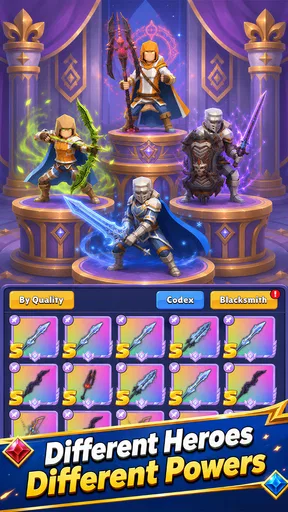
- Large selection of heroes, weapons, and upgrades to experiment with.
- Runs are short enough for quick sessions on mobile devices.
- Offline play makes it convenient when no internet connection is available.
- Frequent enemy waves keep each run tense and engaging.
Limitations of Mythic Survivors
- Progress can feel grindy when upgrading stronger heroes and equipment.
- Random upgrade choices may make some runs feel unfair or repetitive.
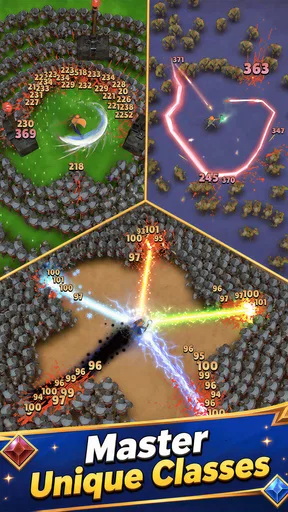
- The screen can become visually crowded during intense late-game waves.
- Limited energy or resource systems may restrict extended play sessions.
- Some content and upgrades may require patience or optional in-app purchases.
Other Releases by Pixery Bilgi Teknolojileri
View All
Funimate Video Editor & Maker
Video Players & Editors4.3

CloneAI AI Video Generator
Photography2.8

Zurna: AI Song & Music Maker
Music & Audio4.4

Impresso - Video & Logo Maker
Video Players & Editors4.5
Similar Picks in This Category
View All
Temple Run 2: Endless Escape
Imangi Studios4.1

PUBG MOBILE
Level Infinite4.3

Free Fire: 9th Anniversary
GARENA INTERNATIONAL I4.4

Talking Tom: Hero Dash Run
Outfit7 Limited4.3

slither.io
Lowtech Studios3.9

Sniper 3D:Gun Shooting Games
Wildlife Studios4.6
Frequently Asked Questions
What is Mythic Survivors, and how does the gameplay work?
Mythic Survivors is a fast-paced survival game in which you control a hero through increasingly dangerous enemy waves. The main objective is to stay alive, collect experience, unlock abilities, and improve your character during each run. Gameplay is designed around simple movement and automatic or semi-automatic attacks, making it easy to start while still requiring careful positioning and upgrade choices.
Can Mythic Survivors be played offline?
Mythic Survivors may support offline play for its core survival stages, allowing you to enjoy a run without a constant internet connection. However, online access can still be required for advertisements, cloud features, account synchronization, events, updates, or certain rewards. Before traveling or playing without data, it is worth launching the game once while connected and checking which menus and modes remain available offline.
Is Mythic Survivors free to download and play?
Mythic Survivors is generally offered as a free download, but the free version may include optional in-app purchases and advertisements. Players can usually progress by completing stages, collecting resources, and improving their heroes without spending money, although purchases may speed up progression or provide additional items. Always review the store listing and purchase settings before downloading, especially on shared devices.
Does Mythic Survivors include different heroes, weapons, or upgrade systems?
The game is built around character development, so progression typically involves unlocking or improving heroes, weapons, abilities, and passive bonuses. During a run, upgrade choices can significantly change your strategy, while permanent improvements help you handle stronger stages later. New players should experiment with different combinations instead of focusing on one ability, because some builds work better against crowds while others are stronger against bosses.
What devices are compatible with Mythic Survivors, and is an internet connection required for updates?
Compatibility depends on the specific Android or iOS version, available storage, and the hardware of your phone or tablet. Older devices may experience longer loading times, reduced performance, or limited visual effects during large enemy waves. An internet connection is normally needed to download the game, receive updates, and access online services, even if the main gameplay can be played offline afterward.
Play our best games!


